


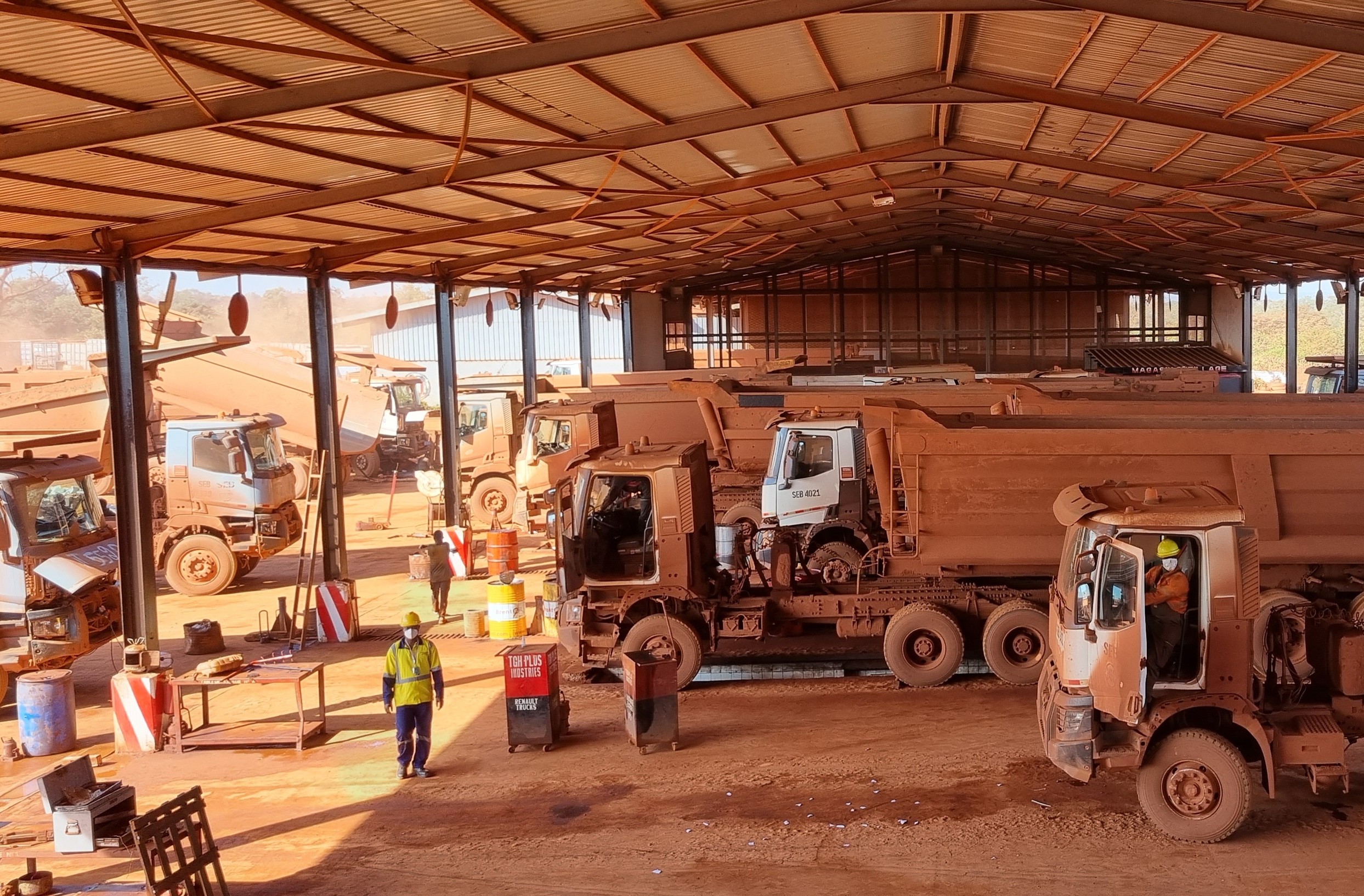
On 7 July, UMS United Mining Supply and Renault Trucks marked ten years of collaboration in Guinea's bauxite corridor, an anniversary that goes well beyond a vehicle-supply contract. For an industry where haul-road logistics can make or break a mine's margins, the arrangement offers a working template of how equipment manufacturers and logistics operators can structure long-term partnerships to keep ore moving from pit to port, even as Guinea's mining sector enters a period of tighter regulation and thinner prices.
A fleet built for the Boké corridor
UMS, founded in 2001 by Fadi Wazni, has grown into one of West Africa's principal mining, industrial and petroleum logistics providers, operating a combined fleet of more than 500 trucks. Within that fleet, 350 Renault Trucks K vehicles are now dedicated to hauling bauxite in the Boké region, home to several of Guinea's largest mining concessions, running continuously between extraction sites and port infrastructure.
The scale of that operation is notable. Each truck logs upward of 190,000 kilometres a year, and the dedicated fleet together covers more than 50 million kilometres annually — a workload that underscores just how demanding Guinea's mine-to-port corridors have become as export volumes have climbed. Since the partnership began in 2016, supported by local distributor TGH Plus, 600 Renault Trucks vehicles have been delivered to UMS in total, reflecting a decade of steady fleet renewal and expansion rather than a one-off procurement.
Beyond the truck sale: a service and data relationship
What distinguishes this partnership from a standard vehicle-supply agreement is the operational infrastructure built around it. UMS maintains an in-house workshop network staffed by more than 150 mechanics working in three rotating shifts, while Renault Trucks works alongside UMS to size and manage on-site spare-parts inventory, an approach aimed squarely at reducing downtime, which in a mining haul fleet translates directly into lost tonnage.
The two companies also review telematics data jointly on a monthly basis to fine-tune fuel consumption and duty cycles, and field feedback from UMS's operations in Guinea has reportedly fed back into Renault Trucks' vehicle development, with several adaptations originally engineered for UMS's conditions now standard in the manufacturer's offering for harsh operating environments. Training is a further pillar: Renault Trucks runs annual sessions for UMS mechanics, drivers and in-house trainers, and a specialist trainer visits mining sites twice a year to work on eco-driving and safety practices with local teams.
Why the timing matters for Guinea's mining sector
The anniversary lands at a pivotal moment for Guinea's bauxite industry. The country shipped a record 183 million tonnes of bauxite in 2025, cementing its position as the world's largest exporter, and growth carried into early 2026, with exports up roughly 25% year-on-year in the first quarter as shipments reached about 60.9 million tonnes between January and March, up from 48.6 million tonnes a year earlier. China continues to absorb the bulk of that volume, taking in more than 70% of Guinea's shipments.
That growth, however, has come with a sharp price correction. By late April 2026, free-on-board prices in Guinea had fallen to roughly USD 32–38 per tonne, their lowest level since March 2022. Guinean authorities have responded by weighing export controls, with reporting pointing to a potential annual ceiling in the region of 150 million tonnes for 2026, alongside tax measures intended to push operators toward investment in domestic refining, rail and port capacity rather than pure volume growth. Analysts at CRU have flagged that this policy shift, combined with underlying demand saturation, is likely to slow Guinea's export growth trajectory through the second half of the year regardless of whether formal caps are enacted.
In parallel, Guinea's broader mining and infrastructure base continues to expand: port capacity nearly doubled during 2025, from five to nine export-ready facilities, and new rail and refining projects — including a 135-kilometre line linking inland mines to the port of Dapilon and several alumina refineries under construction — are reshaping the logistics map that trucking fleets will need to serve in the coming years.
Lessons for Guinea's mining operators
For mining companies and contractors operating in Guinea, UMS–Renault Trucks relationship offers several transferable insights:
Fleet uptime is a production variable, not just a maintenance line item. With haul trucks running 24/7 across punishing terrain, availability directly determines tonnage delivered to port. UMS's model — in-house workshops staffed around the clock, paired with jointly managed spare-parts stocking — illustrates how operators can reduce the intervention times that erode throughput, particularly as export windows tighten under prospective volume caps.
Data-sharing with equipment suppliers can pay for itself. Monthly telematics reviews between UMS and Renault Trucks are aimed at optimising fuel use and operating cycles, a discipline that becomes more valuable, not less, as bauxite prices sit near four-year lows and every efficiency gain matters to project economics.
Long-term manufacturer partnerships can shape equipment to local conditions. Adaptations developed to meet UMS's specific requirements in Guinea have reportedly been folded into Renault Trucks' standard solutions for demanding environments, a reminder that operators with sustained volume and multi-year contracts have leverage to influence vehicle specification rather than simply purchasing off-the-shelf equipment.
Workforce development supports both safety and margins. With training embedded as a recurring, contractual feature of the partnership rather than an ad hoc add-on, UMS has built a pipeline of skilled Guinean mechanics and drivers — relevant given the company's near-98% Guinean staffing and the wider sector's push toward greater local content.
Infrastructure investment decisions should track policy signals. As Conakry considers export restrictions designed to steer the sector toward domestic refining and higher value capture, logistics providers and mine operators alike will need transport strategies flexible enough to handle both continued high-volume ore haulage and a potential shift toward feeding in-country alumina capacity.
As Guinea's bauxite sector navigates record output, a challenging price environment and the prospect of new regulatory constraints, UMS–Renault Trucks partnership stands as a case study in how sustained collaboration between logistics operators and equipment manufacturers — built on service infrastructure, data and training rather than vehicle supply alone — can help keep Guinea's mine-to-port pipeline resilient through the next decade.
Share on social media

-