


The Government of Guinea has initiated a high-level field assessment mission in Siguiri Prefecture following mounting concerns over environmental degradation linked to the use of excavators—locally referred to as “poclains”—in artisanal and small-scale gold mining (ASGM) zones.
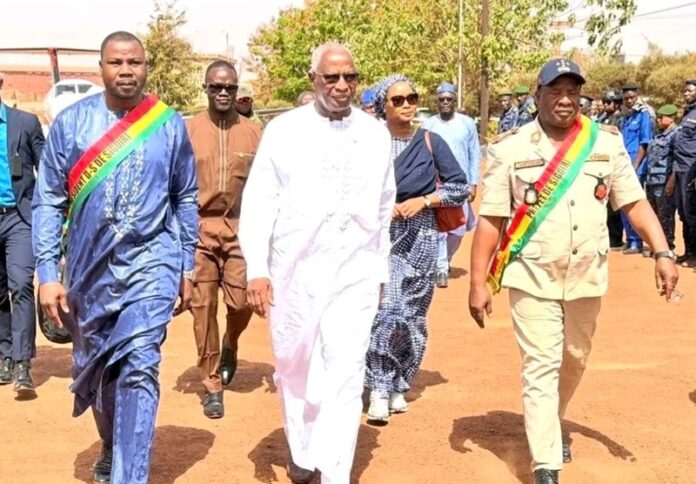
On 20 February 2026, Prime Minister Amadou Oury Bah led a multi-ministerial delegation to the country’s principal gold-producing region to evaluate on-the-ground conditions. The delegation included the Minister of Mines and Geology, Bouna Sylla, the Minister of Environment and Sustainable Development, Djami Diallo, and the Minister of Territorial Administration and Decentralization, Ibrahima Kalil Condé, alongside regional and prefectural authorities.
Siguiri, a strategic gold district hosting both industrial operations and extensive ASGM activity, has in recent months witnessed accelerated land disturbance and sedimentation of waterways attributed to mechanized artisanal mining. The deployment of hydraulic excavators in alluvial zones has significantly increased stripping rates, riverbank destabilization, and turbidity levels in local watercourses.
During a working session at the prefectural administrative block, government officials received detailed briefings on the scale of environmental impacts. According to local authorities, the widespread and often unregulated use of heavy equipment in artisanal permits has amplified ecological damage beyond the absorptive capacity of local ecosystems.
Prime Minister Bah emphasized the gravity of the situation, underscoring the government’s “collective responsibility” to implement structural and sustainable corrective measures. His remarks signal a potential policy recalibration toward stricter enforcement of mining and environmental codes in ASGM zones.
The mission comes amid heightened social tensions. Earlier in the week, youth groups organized protests denouncing the environmental consequences of mechanized artisanal mining. Security forces detained 24 demonstrators, including minors, before a mediation effort led by presidential adviser Fodé Amadou Fofana helped de-escalate the situation.
Minister Condé indicated that concrete regulatory measures would be announced in the coming days, referencing Guinea’s existing anti-vandalism and public order legislation. While details remain pending, sector observers anticipate reinforced controls on the importation, deployment, and operation of excavators in artisanal perimeters, alongside possible site rehabilitation mandates.
For industrial mining operators active in Upper Guinea, the developments are closely watched. Unregulated ASGM expansion has, in certain cases, created interface risks with industrial concessions, including encroachment, water contamination, and community grievances. A more structured regulatory framework could improve land-use clarity and reduce reputational exposure for formal operators.
The Siguiri mission may mark a turning point in the government’s approach to ASGM governance. Mechanization has undeniably improved gold recovery rates and short-term incomes in artisanal communities. However, without environmental management plans, tailings control systems, and site rehabilitation protocols, the long-term liabilities—both ecological and social—are significant.
For mining stakeholders, the key issue will be balance: preserving rural livelihoods while enforcing environmental compliance and safeguarding water resources. The presence of both the Mines and Environment portfolios in the field visit suggests a cross-sectoral strategy, potentially integrating licensing reform, environmental monitoring, and community engagement mechanisms.
As Guinea seeks to consolidate its position as a responsible mining jurisdiction, the outcome of this intervention in Siguiri will be a critical indicator of the state’s capacity to regulate mechanized ASGM and align gold production growth with environmental stewardship.