


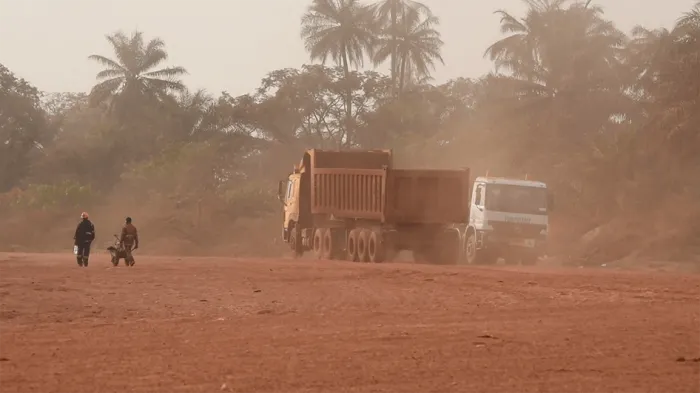
As the world’s second-largest bauxite producer, Guinea plays a vital role in the global aluminum supply chain. Vast reserves in Boké, Télimélé, and Kindia continue to attract major investments and strengthen national revenue. Yet, as mining expands, the environmental costs—from deforestation to water contamination—are becoming increasingly evident. For the sector to remain sustainable, mining companies must embrace stronger environmental stewardship.
Land Degradation and Deforestation
Bauxite mining in Guinea relies on open-pit operations that strip away vegetation and topsoil. This results in large-scale deforestation, loss of biodiversity, and declining soil fertility. Communities near active sites often report reduced agricultural yields and difficulty restoring mined lands. Progressive rehabilitation—replanting trees and stabilizing soils during operations—is essential to mitigate these effects.
Soil Erosion and Water Pollution
Without adequate vegetation cover, mined areas are highly prone to erosion. Sediments enter rivers, causing siltation and turbidity that threaten aquatic habitats. Additionally, chemical runoff from fuel, lubricants, or heavy metals can contaminate surface and groundwater. Mining firms are urged to strengthen water management systems and monitor quality throughout the production chain.
Dust and Air Quality Concerns
Frequent blasting, ore hauling, and road traffic release fine dust particles that travel over long distances. This red dust settles on crops, homes, and vegetation, leading to respiratory health risks and reduced agricultural productivity. Effective dust suppression measures—such as road watering, covering conveyors, and maintaining vegetation buffers—are critical to protect nearby communities.
Tailings and Red Mud Management
As Guinea prepares for local alumina refining, managing red mud—a highly alkaline residue—will become a key challenge. Poorly designed tailings dams can lead to soil and water contamination. The industry must adopt international best practices for tailings design, including lined storage facilities, monitoring systems, and emergency response plans.
Climate and Energy Footprint
While extraction itself has moderate emissions, the refining and smelting stages are energy-intensive. Integrating renewable energy sources such as hydropower and solar could help Guinea position itself as a producer of low-carbon or “green” aluminum, aligning with global decarbonization goals and investor expectations.
Path Forward: Toward Responsible Mining
Guinea’s bauxite wealth offers an unparalleled development opportunity, but environmental sustainability must be at the core of the industry’s evolution. Strengthening Environmental and Social Impact Assessments (ESIAs), ensuring progressive land rehabilitation, and promoting community engagement can turn resource extraction into a sustainable growth engine.
Key Takeaways for Mining Companies
- Rehabilitate progressively: Restore mined lands throughout operations, not after closure.
- Control dust and runoff: Apply best-practice dust suppression and water treatment systems.
- Design safe tailings systems: Prioritize engineering integrity and continuous monitoring.
- Use renewable energy: Power refining operations sustainably to reduce emissions.
- Engage communities early: Transparent dialogue builds trust and long-term stability.