


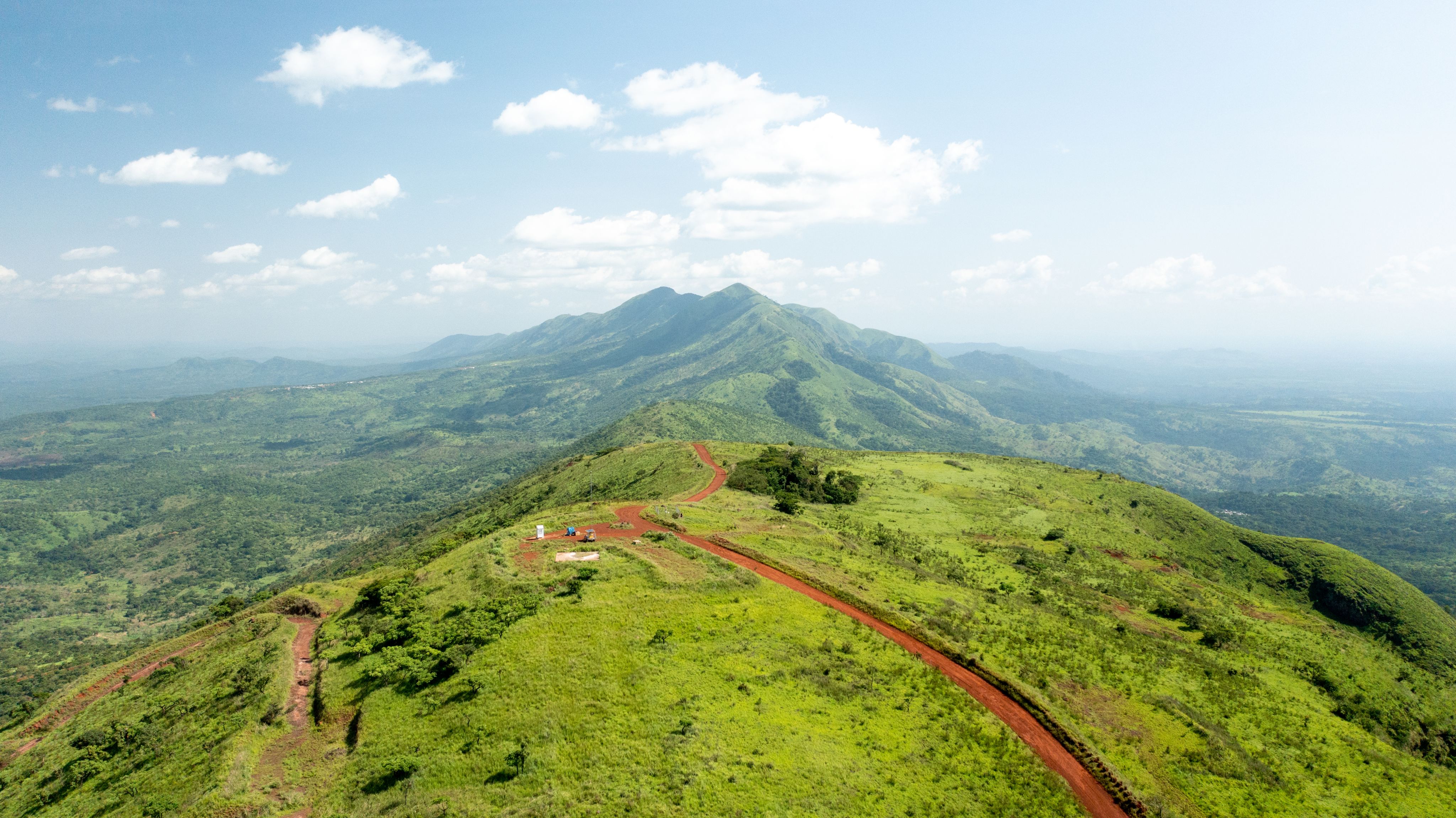
Despite the optimistic vision articulated by Guinea's Minister and Chief of Staff Djiba Diakite—that the Simandou iron ore project should be for Guinea what petroleum is for the Arabian Gulf countries—a careful analysis of ownership structures, historical precedent, employment priorities, and human capital development reveals critical limitations that suggest this transformative potential may be significantly overstated.
The Ownership Disparity: 15% vs. 100%
The most fundamental difference between Guinea's position with Simandou and the Gulf countries' relationship with their petroleum resources lies in ownership structure. Guinea holds only a 15% stake in Simfer S.A. (Blocks 3 and 4), with Rio Tinto controlling 45.05% and Chinalco holding 39.95%, while it also maintains a 15% free-carried interest in the Winning Consortium Simandou (WCS) controlling Blocks 1 and 2. Even in the infrastructure company managing the railway and port, Guinea's stake remains at just 15%.
In stark contrast, Gulf countries assumed direct control of upstream production following the nationalisation of oil throughout the 1970s and 1980s, with national oil companies such as Saudi Aramco, the Abu Dhabi National Oil Company and the Kuwait Petroleum Corporation taking over the exploration, extraction and export of the Gulf's oil supplies. This represents complete state ownership—100% versus 15%.
The revenue implications are straightforward and devastating. When the Simandou project reaches its projected capacity of 120 million tonnes annually at an estimated premium of $16-18 per ton for high-grade ore, Guinea will receive only 15% of the mining profits plus taxes and royalties. The remaining 85% flows to foreign corporations. Gulf countries, by contrast, retain the entirety of petroleum revenues, minus operational costs and occasional profit-sharing arrangements that still favor the state overwhelmingly.
This disparity in ownership translates directly into development capacity. National oil companies financially support government programs and sometimes provide strategic support, often providing fuels to their domestic consumers at a lower price than the fuels they provide to the international market. Guinea lacks this leverage—it cannot direct Simandou's operational priorities, pricing strategies, or downstream integration plans with anywhere near the authority Gulf states exercise over their petroleum sectors.
The Cautionary Tale of CBG: 60 Years Without Transformation
The most damning evidence against the optimistic Simandou narrative comes from Guinea's own experience with the Compagnie des bauxites de Guinée (CBG). CBG is 49% owned by the Guinean State, with the remainder owned by the Boké Investment Company, a 100%-owned subsidiary of Halco Mining, a consortium including Alcoa (45%), Rio Tinto Alcan (45%) and Dadco Investments (10%).
CBG began operations in 1963—over six decades ago—with significantly higher Guinean ownership (49%) than Simandou currently offers (15%). Yet Guinea remains among the world's poorest countries. The literacy rate in Guinea stands at only 45.33% as of 2021, and the country continues to struggle with basic infrastructure, healthcare, and human development indicators.
If 49% ownership of a major bauxite operation operating for 60 years could not lift Guinea from poverty, how can 15% ownership of an iron ore project be expected to produce the transformative effects seen in petroleum-rich Gulf states? The historical precedent suggests that minority stakeholder status in extractive industries, even with "substantial" percentages, does not generate economy-wide transformation.
The CBG experience reveals a critical pattern: revenue does not automatically translate into development when the state lacks both majority control and comprehensive development strategies. While CBG has contributed billions to state revenues over the decades, these funds have not catalyzed the kind of broad-based economic transformation, infrastructure development, and human capital investment visible in Gulf countries.
Employment and Skills Transfer: The National Priority Gap
The goals of national oil companies often include employing citizens, furthering a government's domestic or foreign policies, generating long-term revenue to pay for government programs, and supplying inexpensive domestic energy. This employment mandate has been central to Gulf development strategies, creating a large, well-compensated public sector workforce that drives domestic consumption and builds middle-class stability.
In Gulf economies, national workers are primarily employed in the public sector that is supported by oil revenues, while expatriate workers largely comprise the private sector. This structure ensures that resource revenues directly benefit citizens through employment, even as expatriates handle much private sector activity.
Guinea faces a fundamentally different situation with Simandou. As a 15% minority stakeholder in a consortium led by Rio Tinto and Chinese companies, Guinea has limited ability to mandate employment preferences for its citizens. The operational control rests with foreign partners who will prioritize efficiency and cost-effectiveness—often meaning employment of experienced expatriate workers rather than training Guineans for skilled positions.
CBG's experience again provides instructive precedent. Despite operating in Guinea for 60 years with 49% state ownership, the company has faced persistent criticism regarding limited technology transfer, insufficient training of Guinean professionals for senior positions, and environmental degradation without commensurate local benefit.
The Human Capital Challenge: Literacy and Absorptive Capacity
Perhaps the most overlooked factor in comparative analysis is human capital development. The UAE's literacy rate stands at 98.00% as of 2021, while Qatar's illiteracy rate had dropped to just 1.2% by 2018 for people aged 15 years and above. These near-universal literacy rates existed before massive oil wealth arrived, providing a foundation upon which petrodollar investments could build sophisticated economies.
Guinea, with its adult literacy rate of 45.33% and a significant gender disparity showing male literacy at 61.15% and female literacy at only 31.27%, faces a fundamentally different starting position. More than half the adult population cannot read or write, severely constraining the country's ability to absorb technology transfer, develop domestic industries, or build the skilled workforce necessary for economic diversification.
Even if Simandou generates the projected $1 billion annually in government revenues at full production, translating this into development requires institutional capacity, human capital, and governance systems that take generations to build—and that Gulf countries possessed in greater measure even before their petroleum booms.
The petroleum sector's complexity demands relatively limited skilled workforce—geologists, engineers, and technicians can be imported while the state captures rents through ownership. But building a diversified, resilient economy that outlasts resource extraction requires broad-based education, institutional development, and social infrastructure. Guinea's literacy deficit represents a massive structural handicap that no amount of mineral wealth can quickly overcome.
Conclusion: Tempering Expectations with Realism
Djiba Diakite's aspirational rhetoric deserves recognition for its ambition, but rhetoric must be tempered with realistic assessment. The structural differences between Guinea's 15% stake in Simandou and Gulf countries' complete ownership of their petroleum resources represent not mere percentage-point variations but fundamentally different power dynamics.
The 60-year failure of CBG to transform Guinea despite 49% state ownership—more than triple Simandou's stake—provides sobering historical evidence. The employment and skills transfer advantages enjoyed by Gulf nations through their national oil companies remain unavailable to Guinea as a minority partner. And the human capital foundation that enabled Gulf countries to leverage petroleum wealth effectively simply does not yet exist in Guinea.
Simandou will undoubtedly generate revenues for Guinea and may support some development initiatives. But expecting it to replicate the transformative impact of petroleum on Gulf economies betrays a misunderstanding of the multiple factors—ownership structure, historical precedent, employment priorities, and human capital—that combined to create Gulf prosperity. Without addressing these fundamental disparities, Simandou risks becoming another CBG: a significant revenue source that fails to catalyze comprehensive national transformation.