


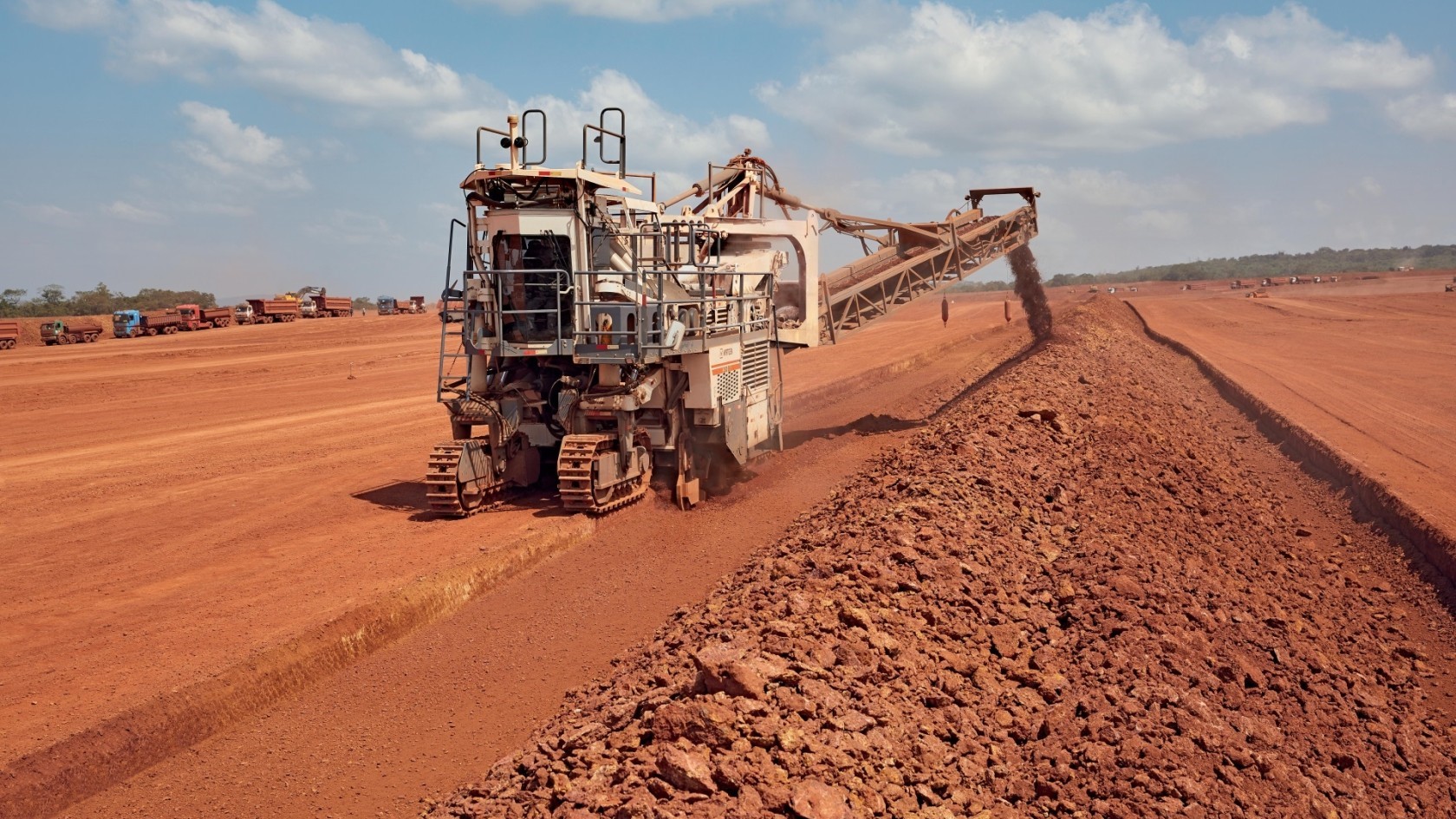
Guinea’s bauxite industry has once again demonstrated its resilience, posting a robust 23% year-on-year increase in exports during the third quarter of 2025 (Q3 2025), despite the dual headwinds of seasonal rains and heightened regulatory scrutiny. According to official data from the Ministry of Mines and Geology, total shipments reached 39.41 million tonnes (mt) between July and September, up from 32mt in the same period last year.
This surge underscores Guinea’s critical role in the global aluminium supply chain. As the world’s second-largest bauxite producer, the West African nation continues to cement its position as a key supplier to China — which accounted for the majority of Q3 shipments. However, the quarter’s monthly average of 13.14mt represented a 19% decline from the first half of the year (H1), reflecting the operational slowdown caused by the country’s heavy rainy season that typically hampers mining access and port throughput.
Despite these disruptions, analysts say output remains on track for a strong annual performance. “With these volumes, Guinea’s annual bauxite output is likely to land around 180 million tonnes — well below the H1 pace but still more than 20% above last year’s record,” observed independent mineral economist Bernabe Sanchez, who specializes in Guinea’s mining sector.
Chinese Dominance Deepens
Chinese companies maintained their commanding position in Guinea’s bauxite landscape, accounting for 54.6% of total Q3 exports. Leading the pack was SMB-Winning, which shipped 17.51mt, followed by CHALCO and CDM-CHINE. Guinea’s supply now represents roughly one-third of China’s bauxite imports, reinforcing Beijing’s strategic leverage over the global aluminium industry.
This dominance aligns with trends in China’s domestic production. While steel output has softened, China’s aluminium production rose 2.6% year-on-year in Q1 2025, driven by robust demand from electric vehicles and infrastructure projects. As a result, China’s reliance on Guinean ore is poised to grow further, making Guinea an indispensable link in the decarbonization and electrification of the global economy.
Policy Pressure and Refining Gap
Guinea’s military-led government has intensified efforts to localize value addition, pressing mining companies to construct alumina refineries domestically. This policy shift, aimed at capturing greater economic benefits, has introduced an element of regulatory uncertainty. Several licences have been revoked this year for non-compliance or project delays.
Yet, despite government pressure, only 78,000 tonnes of alumina were exported in Q3 2025 — a negligible fraction compared to raw bauxite volumes. This gap underscores the long-standing infrastructural and investment challenges facing Guinea’s refining ambitions, including high energy costs, logistical constraints, and the need for stable policy frameworks to attract long-term capital.
Outlook: Opportunities Amid Transition
The near-term outlook for Guinea’s bauxite sector remains strong. The ongoing ramp-up of the Simandou iron ore project, whose first shipment is imminent, will further enhance Guinea’s stature as a dual supplier of strategic minerals to global markets — particularly China.
However, mining operators will need to navigate increasingly complex conditions — balancing production efficiency with compliance to evolving government mandates and sustainability standards. For investors and operators alike, Guinea’s Q3 performance reaffirms both the scale of opportunity and the necessity of strategic adaptation in one of the world’s most dynamic mining frontiers.