


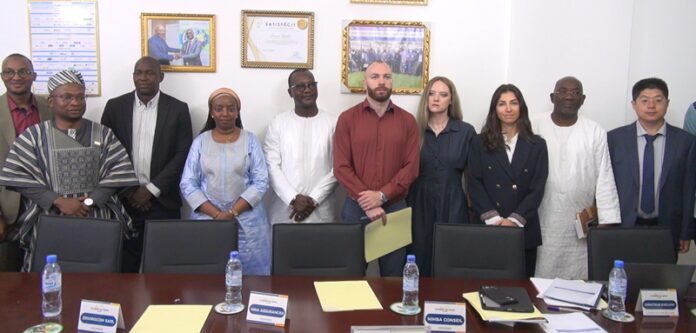
The Chamber of Mines of Guinea (CMG) has approved a new strategic roadmap for the period 2026–2028, marking a significant step toward strengthening the institutional role of the organization and supporting the sustainable development of Guinea’s mining sector.
The strategy was validated during the first Board of Directors meeting of 2026, held in Conakry on March 5, where members unanimously adopted both the three-year strategic plan and the 2026 operating budget, which reflects a notable increase compared with previous years. The decisions come at a time when mining continues to serve as one of the principal drivers of Guinea’s economic growth.
Chaired by Karifa Condé, President of the Board, the meeting represented the second board session since the election of the Chamber’s new executive bureau and is seen as a defining moment in consolidating the institution’s governance framework and operational direction.
According to Mamadou Keïta, First Vice President of the CMG, the adopted strategy establishes the main priorities that will guide the Chamber’s activities over the next three years. The roadmap is structured around four core pillars: institutional governance, environmental and ESG integration, environmental stewardship, and communication and advocacy.
“These strategic axes have allowed us to define 28 concrete objectives that will guide the Chamber’s action throughout the mandate entrusted to us by our members,” Keïta explained. He emphasized that the increased 2026 budget reflects the scale of challenges facing the mining sector and the need for stronger institutional capacity.
Following the adoption of the strategy, the next phase will focus on implementation and operationalization.
François Phopho Kamano, Executive Director of the Chamber of Mines, stressed that the approval of the budget and the annual work plan signals the beginning of a more intensive operational phase for the organization. The executive management will focus on strengthening internal capacity and ensuring that member companies derive tangible value from their participation in the Chamber.
Among the key priorities highlighted by Kamano is the integration of Environmental, Social and Governance (ESG) principles, particularly as Guinea’s regulatory framework evolves. The Chamber intends to encourage mining companies to align with new transparency and reporting standards while promoting responsible mining practices that contribute to national development.
The meeting also reflected the growing participation of affiliated members and technical partners within the Chamber’s governance structure.
Representatives from organizations such as NSIA Assurance and Bureau Veritas welcomed the opportunity to engage more closely with the mining ecosystem, particularly in areas related to risk management, investment financing, compliance, and technical services.
By adopting this new strategic framework, the Chamber of Mines of Guinea aims to reinforce its credibility, strengthen collaboration among stakeholders, and promote responsible and competitive mining operations aligned with international standards.
For Guinea’s mining industry, the challenge now lies in translating these strategic commitments into measurable outcomes that support both sectoral growth and the country’s broader economic development objectives.