


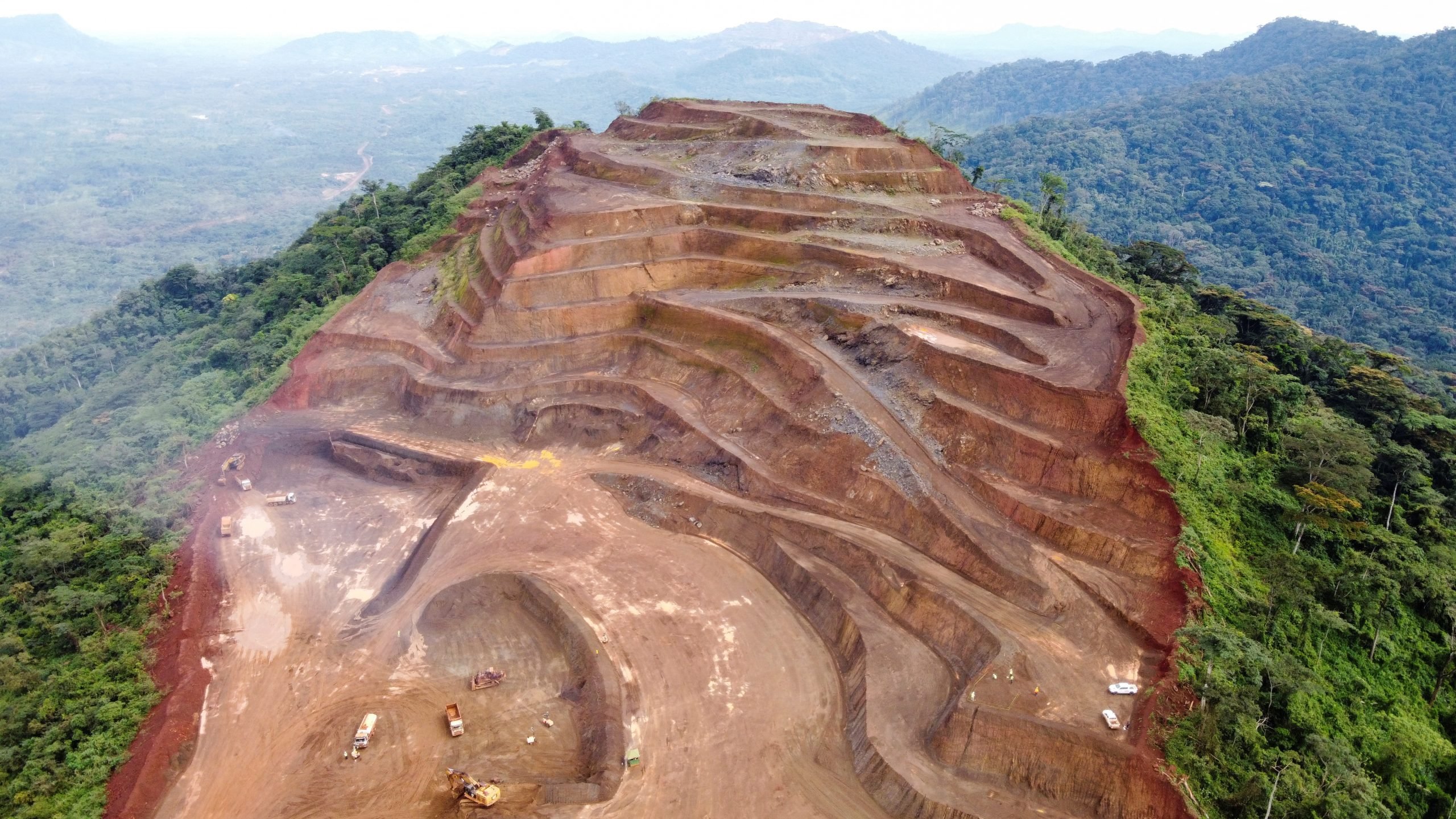
The geopolitical landscape of West African mining is poised for a significant shift, following a clear directive for the US government’s Millennium Challenge Corporation (MCC) to engage directly with the mining sector. While the MCC’s initial target list names Liberia and Mozambique for infrastructure and industry support, industry actors are acutely focused on whether this Liberian pivot is a strategic gateway—a proxy play—to secure an evacuation route for lucrative iron ore assets in neighbouring Guinea.
MCC’s New Mandate: De-risking the Mining Space
The revived MCC, chaired by Deputy Secretary of State Christopher Landau, has roared back to life with a clear new mandate. As reported by Washington lawyer and international affairs consultant Tony Carroll, the agency has been explicitly "given a directive to get into the mining space" and is actively developing a strategy to support the industry through infrastructure development. This move signals a profound geostrategic shift, positioning the US agency to help de-risk mineral supply chains in resource-rich nations.
The two key countries identified for elaborating this new strategy are Liberia and Mozambique. For the Guinea mining fraternity, the focus on Liberia is paramount. The MCC’s targeted support for "infrastructure, support for the mining industry" in Monrovia, if realised, has the potential to fundamentally alter the competitive dynamics surrounding key Guinean assets that require Liberian logistics.
The Liberty Corridor: Connecting Conakry’s Wealth to Monrovia’s Ports
The most critical indicator of the US’s indirect interest in Guinea is the attention being paid to the so-called ‘Liberty Corridor’. This proposed logistics chain aims to connect iron ore mines in Guinea, specifically those held by Ivanhoe Atlantic, to the coast of Liberia, granting access to its established deep-water ports.
Ivanhoe Atlantic, whose efforts are led by figures well-connected to the Trump administration, has been vigorously lobbying the Liberian government of President Joseph Boakai for rail access to facilitate the export of its Guinean iron ore. The company’s success, and thus the feasibility of bringing a major Guinean concession into full production, hinges entirely on securing this critical transport infrastructure in Liberia.
The MCC, by focusing its infrastructure development and financial backing on Liberia's mining support systems, is effectively setting the stage to enable the Liberty Corridor. While the US is not directly acquiring a mining concession in Guinea, its investment in the adjacent evacuation route provides the necessary logistical assurance and financial gravity to unlock a Guinean project. In essence, Washington is pursuing an infrastructure-led approach to securing access to Guinea’s strategic mineral wealth. This model allows the US to compete with other global powers by controlling the supply chain bottleneck, rather than engaging in direct concession ownership battles.
Analysis: A Proxy Strategy for Conakry?
The question of whether the USA is eying a mining concession in Guinea through Liberia must be answered with a nuanced, “yes, but indirectly.”
The direct financial and technical support from the MCC is slated for Liberia's infrastructure, not a mine in Guinea. However, this is a sophisticated geostrategic manoeuvre. By backing the infrastructure crucial for Ivanhoe Atlantic’s Guinean operations—the logistics corridor—the US effectively sponsors the success and viability of a non-Chinese-backed iron ore operation in Guinea. This is a supply chain strategy.
The underlying National Security Strategy, recently released by the White House, explicitly reiterates an increased US focus on critical minerals and the energy sector. Securing a reliable, efficient, and potentially US-aligned supply of iron ore, a foundational element of global infrastructure and manufacturing, via a US-supported corridor aligns perfectly with this objective. The MCC's intervention can provide the necessary political cover and financial heft to resolve the complex infrastructure access issues that often plague such cross-border projects, thereby de-risking a major Guinean investment for Western capital.
The ArcelorMittal Bottleneck
This strategic approach faces a significant hurdle in the form of the incumbent operator, ArcelorMittal. As Liberia’s largest foreign investor, ArcelorMittal currently holds a privileged position and control over the critical transport infrastructure, having invested substantially in overhauling the rail and port facilities.
The company is understandably resistant to losing its privileged access or sharing this essential infrastructure with Ivanhoe Atlantic’s competing project. This creates a regulatory and commercial bottleneck. The MCC's involvement in Liberia could be the crucial factor that helps resolve this impasse, either by supporting the construction of alternative infrastructure or by applying political and financial leverage to negotiate open access to the existing railway network. The outcome of the lobbying effort between Ivanhoe Atlantic and President Boakai, amplified by the promise of MCC funding, will be critical to the future of the Liberty Corridor and, by extension, the export outlook for Guinean iron ore.
Outlook for Guinea Mining Insights
As the MCC board meets this week, all eyes in the West African mining sector will be on the details of their portfolio review and any resolutions concerning Liberia. A major commitment will be a strong signal that the US is ready to actively shape the region’s mineral evacuation logistics. For Guinea Mining Insights, the unfolding drama is clear: US interest in the nation's immense mineral wealth is being expressed not through direct concession acquisition, but through a calculated strategy of supporting the critical transport infrastructure in Liberia that is indispensable to getting Guinea’s iron ore to the global market. The outcome will define the viability of the Liberty Corridor and solidify the region’s role in the global critical minerals supply chain for the foreseeable future.