


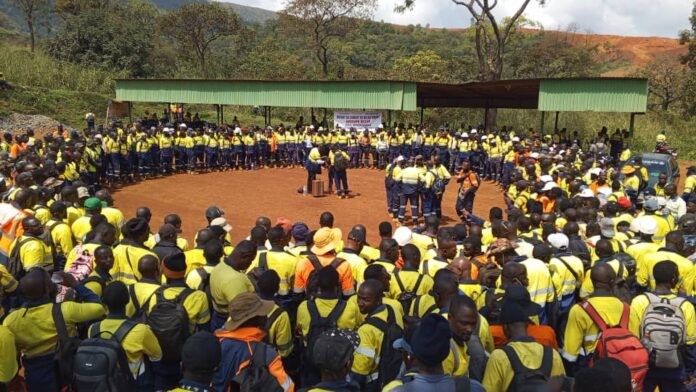
A labour dispute involving BCEIP, a subcontractor of Mota Engil on the Simandou Project, has entered a critical phase after more than a week of work stoppage in Beyla. The situation now threatens to disrupt civil works timelines on one of Guinea’s most strategic mining and infrastructure developments. According to worker representatives, BCEIP has warned that employees who do not immediately resume duty risk termination—a move that could have direct implications for project continuity and contractor relations across the Simandou corridor.
The conflict centres on grievances from skilled construction workers—masons, carpenters, steel fixers, and related trades—recruited by BCEIP on behalf of Mota Engil. The workers launched a strike on 13 November 2025, demanding either the removal of BCEIP from the employment chain or their transfer under the direct responsibility of Mota Engil. Despite mediation efforts led by local authorities in Beyla, the parties have failed to reach common ground.
Recognising the potential operational impact, Rio Tinto intervened on 21 October, dispatching its Human Resources Director, Éric Loua, to facilitate negotiations. Loua met with worker representatives alongside managers from Rio Tinto, Mota Engil, BCEIP, and the national labour inspectorate. However, like previous attempts, the meeting concluded without a breakthrough.
A key point of contention lies in the regulatory framework governing BCEIP’s status as a temporary employment agency. According to Loua, BCEIP’s accreditation was issued only in October 2025, meaning any formal transfer of employees to Mota Engil would not be possible before November 2026. This timeline was met with frustration from the workers, who argue that BCEIP’s management practices and employment conditions fall below acceptable standards for a flagship national project.
The workers’ delegation insists that the strike is a last resort stemming from long-running grievances. Reports indicate that employees unanimously rejected Rio Tinto’s call to resume work, stating they “prefer to be dismissed” rather than continue under BCEIP. This hardened stance underscores the deteriorating trust between workers and the subcontractor.
For stakeholders in the Simandou value chain, the situation raises several operational and strategic concerns:
1. Contractor management is becoming a reputational risk.
Simandou partners—particularly Rio Tinto and Mota Engil—must ensure that subcontractor practices do not undermine workforce morale or violate Guinean labour standards. Discontent at lower levels can quickly translate into project delays and community tensions.
2. Regulatory clarity on temporary labour agencies is critical.
The new accreditation of BCEIP demonstrates a tightening of labour oversight, but the delayed timeline for transferring workers exposes gaps that may fuel further disputes if not managed proactively.
3. Workforce stability remains a key determinant of construction progress.
With major infrastructure works underway—including access roads, platforms, and camp expansions—any prolonged stoppage in Beyla could ripple into broader schedule risks.
Going forward, mining actors will be watching closely to see whether Rio Tinto and Mota Engil adopt a more direct role in resolving worker concerns. Sustainable workforce relations remain essential for maintaining momentum on the multi-billion-dollar Simandou development. Failure to defuse this standoff could set an unwelcome precedent at a time when Guinea is positioning the project as a catalyst for national economic transformation.