


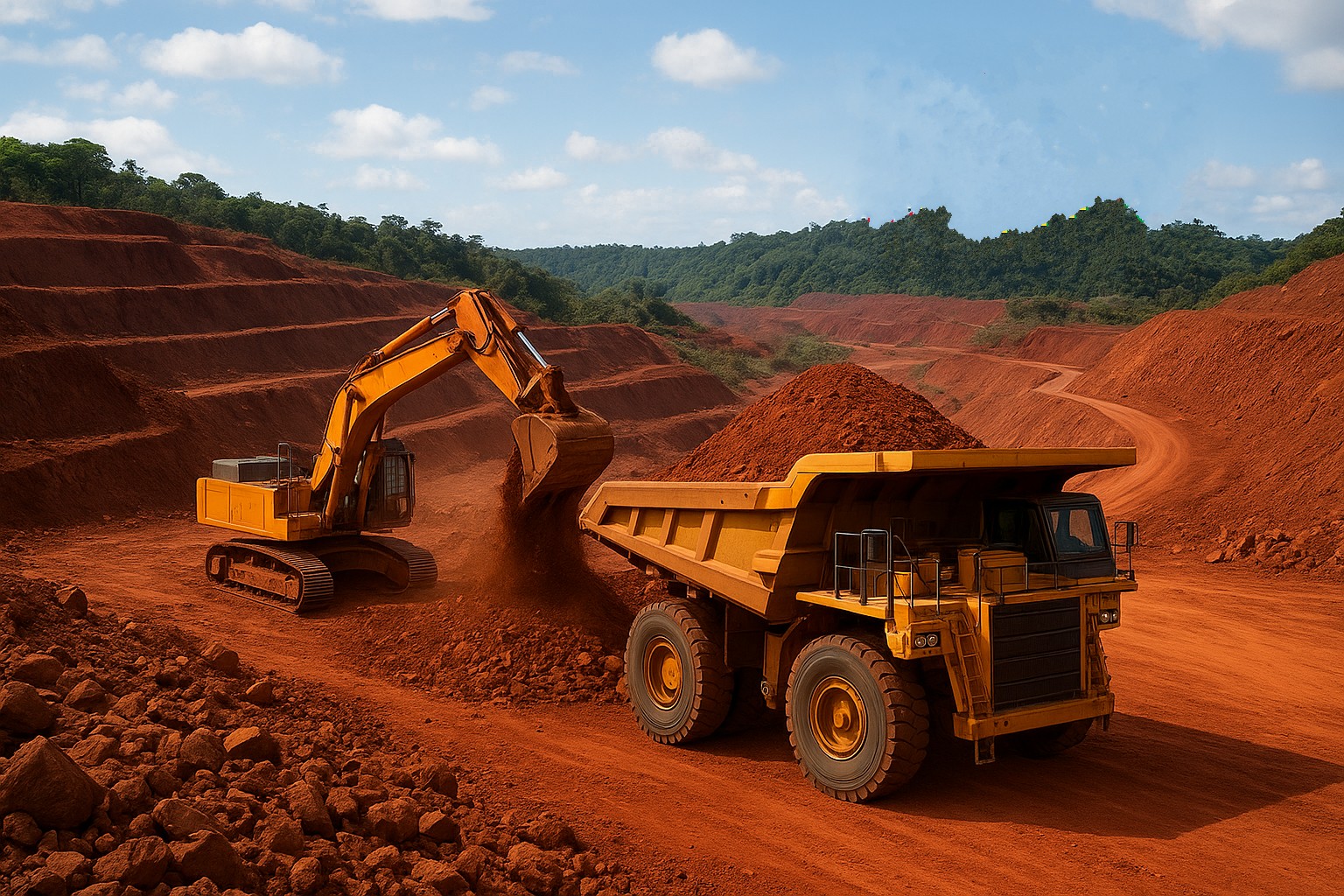
The $1 billion arbitration claim filed by Axis Minerals against Guinea represents more than a bilateral dispute—it crystallizes fundamental tensions in African extractive governance between sovereign control and investor confidence. As Guinea pursues its ambitious Simandou 2040 development agenda, the abrupt revocation of Axis's mining license raises critical questions about regulatory predictability in one of the world's richest bauxite provinces.
The Revocation: Process and Precedent
On May 14, 2025, Guinea's transitional government announced the cancellation of numerous mining licenses through a televised broadcast, citing violations of the 2013 mining code including non-commencement of operations, underinvestment, and failure to meet downstream processing commitments. The sweep ultimately affected over 100 titles, with some sources indicating the final count exceeded 300 withdrawn rights.
Axis Minerals—controlled by the Oswal Group and operating since 2020 following years of exploration—found itself among those targeted despite what the company describes as substantial operational performance. Before revocation, Axis reported daily production averaging 169,000 tonnes of bauxite, contributing approximately 40 million tonnes of exports between 2023 and 2025, making it Guinea's second-largest bauxite source. The operation employed over 5,000 workers and had transformed Boffa into a significant mining center.
The company asserts it received no prior warning, formal notice, or opportunity to remedy alleged deficiencies. Operations were halted by police on May 15, and bank accounts were subsequently frozen. Guinea's government has characterized the action as overdue enforcement; Axis and other affected operators describe it as arbitrary administrative action lacking due process.
Legal Strategy and Exposure
Axis Minerals initiated ad hoc arbitration proceedings in New York in July 2025, with formal notice served to Guinea on September 1. The company has reportedly retained international law firm Jones Day and is pursuing claims under investment treaties between the United Arab Emirates and Guinea, seeking damages exceeding $1 billion.
Guinea has not yet agreed to participate in arbitration, though it has been formally served. The Ministry of Mines declined comment when contacted by media. If the government continues to refuse engagement, Axis may seek judicial compulsion through U.S. courts to enforce arbitration clauses contained in bilateral investment treaties.
This case is unlikely to remain isolated. Multiple international companies lost licenses in the May purge, including AngloGold Ashanti's subsidiary, Predictive Discovery, Arrow Minerals, and Falcon Energy Materials. Should these operators pursue similar legal strategies, Guinea could face cumulative claims potentially reaching several billion dollars—a significant burden for a nation whose mining sector is central to fiscal stability and development financing.
Implications for Guinea's Mining Sector
The Axis case arrives at a delicate moment. Guinea is attempting to position itself as a premier destination for mining investment, particularly through the Simandou iron ore project, which represents approximately $20 billion in planned investment. The country holds roughly one-quarter of global bauxite reserves and significant deposits of iron, gold, and lithium.
However, the Fraser Institute's July 2025 mining survey ranked Guinea among the ten least attractive jurisdictions globally for mining investment—a ranking the mass license cancellations appear to validate. The fundamental challenge is messaging inconsistency: government officials court new investors internationally while existing operators face summary license withdrawal without transparent administrative process.
From an investor perspective, the Axis revocation is particularly troubling because the company was operational and export-active rather than dormant or non-compliant in obvious ways. If licenses can be revoked for producing operations without clear procedural safeguards, investment security is fundamentally compromised regardless of contract terms or regulatory compliance.
Resource Nationalism vs. Investment Climate
Guinea's actions reflect broader African debates about value capture from extractive industries. Demands for local processing, domestic value addition, and stricter enforcement of mining code obligations are legitimate policy objectives pursued by many resource states. The challenge lies in implementation methodology.
Immediate, unilateral revocation without dialogue creates regulatory risk that exceeds most investors' tolerance thresholds, particularly in greenfield development where capital recovery timelines span decades. If the purge was genuinely motivated by non-compliance, transparent administrative procedures with notice periods and remedy opportunities would have preserved both enforcement credibility and investment stability.
Questions have emerged about whether President Mamadi Doumbouya was fully briefed on specific cases like Axis before approvals were granted for the mass revocation. Some observers suggest the action may reflect capture of mining governance by officials pursuing rent-seeking rather than coherent industrial policy.
Outlook
The arbitration outcome will establish important precedent. A substantial award against Guinea would demonstrate that investment treaty protections have teeth and that summary administrative action carries material cost. Conversely, unsuccessful claims might embolden other resource states to pursue aggressive license reviews.
For Guinea's bauxite sector specifically, the immediate effect is chilling. Major operators will reassess political risk premiums, and new entrants will demand stronger legal protections or higher return thresholds to compensate for elevated sovereign risk. The country's development ambitions require patient, long-cycle capital—precisely the investment type most sensitive to regulatory unpredictability.
The Axis case ultimately tests whether resource nationalism can coexist with the investment climate necessary to finance that nationalism's developmental objectives. Guinea's answer to that question will shape its mining trajectory for years to come.