


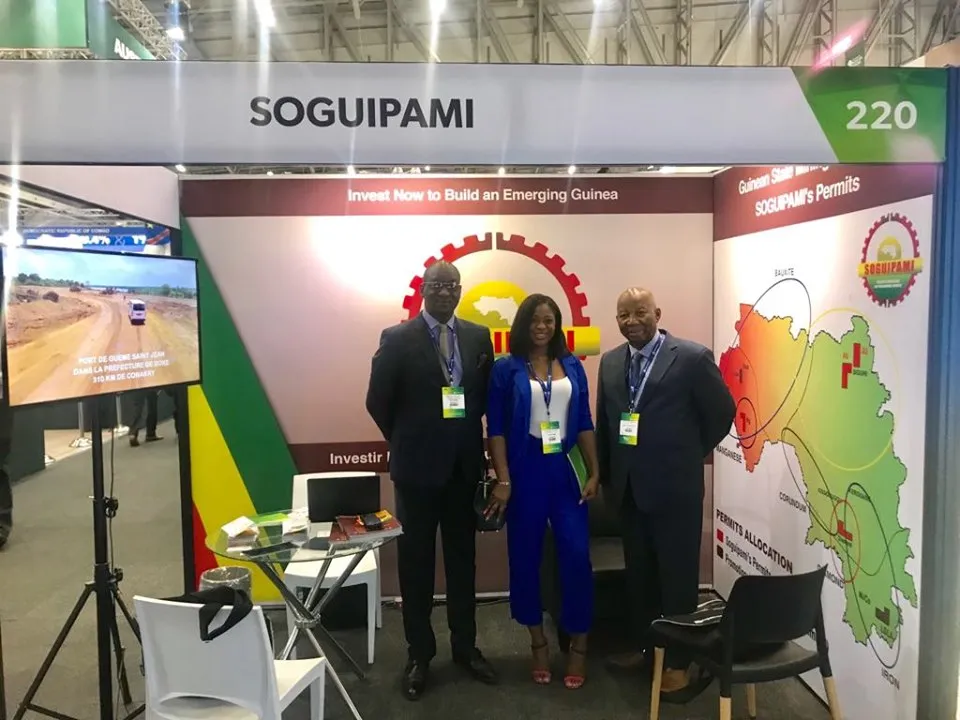
The Société Guinéenne du Patrimoine Minier (SOGUIPAMI) represents a pivotal institution in Guinea's mining sector, established through Decree D/2011/218/PRG/SGG on August 11, 2011. Created in accordance with Article 29 of Law L/2011/005/CNT, which governs the constitution and management of Guinea's mining heritage, SOGUIPAMI was granted legal personality, financial autonomy, and independent management authority. This institutional framework positions the company as a unique bridge between public interests and private sector efficiency in one of Africa's most mineral-rich nations.
Legal Structure and Governance
SOGUIPAMI operates as a public limited company (société anonyme) structured according to OHADA (Organization for the Harmonization of Business Law in Africa) standards and subject to private law management principles. The State of Guinea serves as the sole shareholder, creating a hybrid model that combines governmental strategic objectives with commercial operational flexibility. This structure was subsequently modified by Decree D/2015/016/PRG/SGG dated February 12, 2015, which refined and expanded the company's mandate to address evolving needs in Guinea's mining sector.
The company's governance model reflects a deliberate strategic choice by the Guinean government to separate regulatory and supervisory functions—which remain with public mining administration—from economic and financial activities, which are entrusted to SOGUIPAMI as a private law entity. This separation allows for more efficient management while maintaining state oversight and alignment with national development priorities.
Core Missions and Objectives
SOGUIPAMI's mandate encompasses four primary missions that define its role in Guinea's mining ecosystem. First, the company manages State participations in mining companies, industrial societies, infrastructure companies, and service companies where the government holds shares. This portfolio management function positions SOGUIPAMI as the State's representative in commercial mining ventures, ensuring that national interests are protected and maximized.
Second, SOGUIPAMI participates directly in mineral exploration by holding research permits either independently or in partnership arrangements. These exploration activities serve promotional purposes and operate within the legal framework established by Law L/2011/006/CNT of September 9, 2011, which instituted Guinea's Mining Code. This exploratory function allows the company to generate geological knowledge, identify promising mineral resources, and create opportunities for future development.
Third, the company commercializes mineral products belonging to the State as part of exercising the government's commercialization rights. This role involves marketing and selling minerals from state-owned deposits or from the State's share in joint ventures, generating revenue for national development priorities.
Fourth, SOGUIPAMI participates in government negotiations concerning contracts between the State and mining companies in which it manages state participations, as well as negotiations related to mining infrastructure development. This diplomatic-commercial function ensures technical expertise informs policy decisions and contractual arrangements.
Exploration Portfolio
SOGUIPAMI currently holds three active research permits covering strategically important mineral resources. In the Siguiri Prefecture of Upper Guinea, the company operates two gold exploration permits: Permit 22270 covers 90.03 km² under Decree N° A2020/3062/MMG/SGG, while Permit 22271 spans 90.72 km² under Decree N° A2020/3063/MMG/SGG. Together, these permits encompass approximately 181 km² in a region known for significant gold mineralization and proximity to major producing mines.
The Siguiri permits are located approximately 60 km north of the SAG (Société Ashanti Goldfields de Guinée) mine, which has estimated mineral reserves of approximately 8.5 million ounces. The permits also lie 70-90 km east of the Lero deposit and 150-170 km northeast of the Kiniero mine, positioning them within Guinea's most prospective gold belt. The geological setting comprises Birimian-age volcano-sedimentary rocks, metasediments, and monzogranite intrusions—the same geological environment that hosts Guinea's largest gold deposits.
Additionally, SOGUIPAMI holds diamond exploration Permit 22307, covering 20.4747 km² in the Kissidougou and Kérouané prefectures under Decree N° A/2021/721/MMG/SGG. This permit lies within the Makona diamond field, part of the West African diamond province, in an area with known kimberlite dykes and alluvial diamond occurrences. The region has a history of both artisanal and industrial diamond mining, indicating significant mineralization potential.
Exploration Activities and Results
SOGUIPAMI has conducted substantial exploration work across its permit areas, demonstrating serious commitment to mineral resource development. On the gold permits (22270 and 22271), the company completed comprehensive soil geochemistry surveys between March and June 2018. This program involved systematic sampling on a 200m x 300m grid covering the entire 180.75 km² area of both permits.
The soil geochemistry campaign collected 3,221 samples, including rigorous quality control measures with 112 blank samples, 63 field duplicates, and 65 certified reference standards—representing 8% quality control samples, which meets international best practices. All samples were analyzed at the SGS laboratory in Bamako, Mali, for gold content using aqua regia digestion and atomic absorption methods.
Results from the gold exploration proved highly encouraging. In Permit 22270, gold values ranged from 0.5 to 11,614 ppb (11.64 g/t), with 58% of samples showing gold content equal to or greater than 5 ppb. Notably, 24.13% of samples exceeded 10 ppb with an average grade of 109.9 ppb, and 3.0% exceeded 50 ppb with an average of 761.43 ppb. Multiple gold anomalies were identified, oriented primarily northwest to northeast, and spatially associated with monzogranite-metasediment contacts and major structural features.
Permit 22271 showed more modest but still significant results, with gold values between 0.5 and 384 ppb. Here, 24.2% of samples exceeded 5 ppb, and 7.08% exceeded 10 ppb. The best anomalies occur in the northern part of this permit, also oriented northwest, suggesting structural control on mineralization.
For diamond exploration, SOGUIPAMI conducted reconnaissance work in May-June 2019 on Permit 22307. This program included 16.5 km of geological traverses, stream sediment sampling, and examination of artisanal mining sites. Ten heavy mineral samples totaling 504 liters were collected and processed to identify diamond indicator minerals. The work successfully identified pyrope garnets, chrome-rich picro-ilmenite, and corundum—all recognized diamond pathfinder minerals—confirming the area's diamond potential.
Strategic Value and Future Outlook
SOGUIPAMI has developed specialized expertise in supporting mining investors throughout project development, particularly in accelerating the transition from exploration to production phases. The company offers comprehensive services including permit management support, financing assistance, community relations guidance, and technical accompaniment. This value-added approach positions SOGUIPAMI as more than a passive state participant; rather, it serves as an active facilitator of responsible mining development.
The company's exploration results demonstrate significant potential for economic mineral deposits. The gold permits show characteristics suggesting possible extensions of mineralization from the nearby SAG mine system, while the diamond permit exhibits confirmed indicator minerals in alluvial settings with estimated preliminary resources. These achievements validate SOGUIPAMI's technical capabilities and its potential to contribute meaningfully to Guinea's mining sector development and economic growth.