


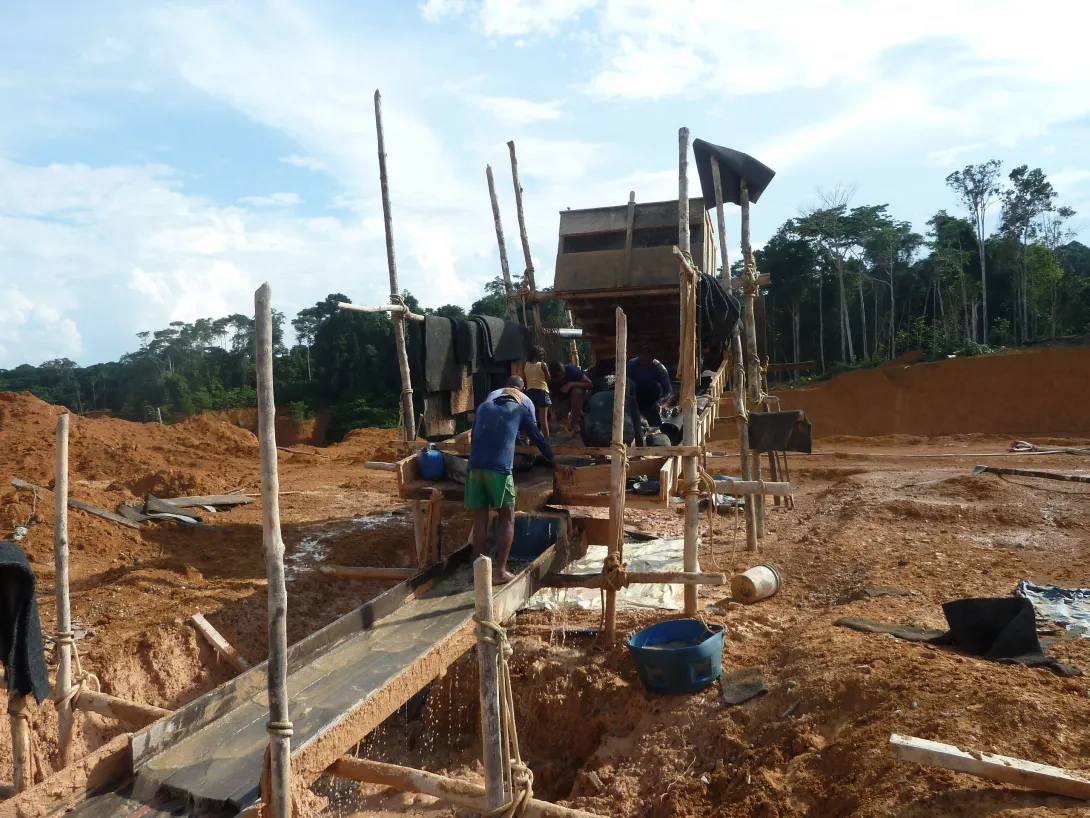
Gold mining has long been a cornerstone of Guinea’s economy and livelihoods, particularly in regions such as Siguiri, Dinguiraye, Mandiana, Kouroussa, and Kankan. Thousands of Guineans depend on small-scale and semi-artisanal mining as their main source of income. When managed responsibly, semi-artisanal mining can provide sustainable livelihoods, strengthen local economies, and reduce environmental damage. This guide offers practical advice for miners, cooperatives, and local communities on how to mine gold more efficiently, safely, and responsibly.
1. Understanding Semi-Artisanal Gold Mining
Semi-artisanal gold mining occupies a middle ground between artisanal and industrial mining. It uses some mechanized tools and techniques, but operations remain small in scale and locally managed. Unlike purely artisanal miners who rely on manual labor, semi-artisanal miners often use water pumps, crushers, or small excavators to increase productivity.
Key features of semi-artisanal mining include:
- Organized groups or cooperatives with mining permits.
- Limited mechanization (grinders, sluice boxes, pumps).
- Shallow or medium-depth open pits or tunnels.
- Basic ore processing methods on-site.
- Focus on sustainable and legal production.
The transition from artisanal to semi-artisanal mining helps improve recovery rates, worker safety, and compliance with environmental standards while maintaining community ownership.
2. Legal Framework and Licensing
Mining activities in Guinea are governed by the Mining Code (2011, revised 2013) and subsequent regulations. To operate legally, miners must obtain appropriate authorizations.
Licensing Steps:
- Join or form a cooperative.
Register a mining cooperative through the local prefectural office or the National Office for Artisanal and Small-Scale Mining (Bureau National d’Artisanat Minier – BNAM). - Apply for an artisanal or semi-artisanal mining permit.
The permit defines the geographical area, duration (usually 3 years renewable), and allowed production methods. - Respect community and environmental obligations.
Before mining begins, inform local authorities and landowners. Ensure you follow rules for waste management, water use, and rehabilitation.
Note: Operating without a license exposes miners to confiscation, fines, or imprisonment. Working legally also makes it easier to access financing, technical assistance, and markets.
3. Choosing a Suitable Site
Selecting a proper mining site is critical for both safety and profitability.
Key criteria include:
- Presence of alluvial or primary gold deposits.
- Accessibility (roads, water, fuel supply).
- Low risk of flooding or collapse.
- Distance from protected forests or villages.
- Availability of land with legal access rights.
Before digging, conduct prospecting using simple tools:
- Gold pan for testing surface sediments.
- Metal detector for tracing nuggets.
- Geological observation (color of soil, quartz veins, river bends).
If gold is consistently found in several test samples, the site may be worth developing.
4. Mining Techniques
A. Alluvial Mining
Alluvial gold is found in riverbeds and floodplains.
Steps:
- Remove topsoil to reach the gravel layer (pay dirt).
- Wash the gravel in sluice boxes or wooden troughs lined with carpets or riffles to trap heavy particles.
- Collect the concentrate and pan it carefully to recover the gold.
Use water pumps to increase efficiency and reduce manual labor. Ensure wastewater flows into settling ponds to prevent river pollution.
B. Hard-Rock (Primary) Mining
Primary gold is embedded in rock (quartz veins).
Steps:
- Dig small tunnels or open pits to access the ore.
- Crush the rock manually with hammers or mechanically with small crushers.
- Grind it into powder using mills or mortars.
- Separate gold from other minerals using gravity concentration (sluices, shaking tables, or panning).
Avoid deep, unsupported tunnels; reinforce walls with timber to prevent collapses.
5. Gold Recovery and Processing
After concentration, gold must be extracted from the mineral mix.
A. Mercury-Free Methods (Recommended)
- Gravity concentration: Use sluices, centrifuges, or shaking tables.
- Direct smelting: Concentrate the gold, dry it, and melt it with borax in a crucible. This method is safer, cheaper, and environmentally friendly.
B. If Mercury Is Used (Not Recommended)
Some miners still use mercury to amalgamate gold. This method poses serious health and environmental risks.
If unavoidable:
- Use mercury only in closed containers.
- Avoid handling it with bare hands.
- Burn amalgam in a retort to capture vapors.
- Never dispose of mercury waste into rivers.
Governments and NGOs now promote mercury-free alternatives under the Minamata Convention on Mercury, to which Guinea is a signatory.
6. Health and Safety Practices
Mining can be dangerous if safety measures are neglected.
Key safety rules:
- Always wear boots, gloves, helmets, and dust masks.
- Reinforce tunnels with wood or metal.
- Avoid working alone in pits.
- Keep children and pregnant women away from mining zones.
- Ensure first-aid kits and clean drinking water are available.
- Train workers on emergency response and mine evacuation.
For mechanical equipment, ensure operators receive training and perform regular maintenance to prevent accidents.
7. Environmental Protection
Responsible mining respects the environment and local livelihoods.
Best environmental practices:
- Refill abandoned pits to prevent accidents.
- Build settling ponds to filter muddy water before discharge.
- Avoid cutting trees unnecessarily.
- Separate fuel and oil storage areas from water sources.
- Replant trees after mining ends (site rehabilitation).
Proper waste management preserves fertile land for agriculture and protects communities from floods and pollution.
8. Economic Management and Cooperative Organization
Working collectively improves income stability and bargaining power.
Tips for cooperative success:
- Elect transparent and accountable leaders.
- Keep detailed production and expense records.
- Share profits fairly among members.
- Set aside a portion of income for equipment maintenance and site rehabilitation.
- Establish a community development fund for schools, wells, or health centers.
By organizing in cooperatives, miners can access training, microcredit, and fair gold trading channels.
9. Marketing and Value Addition
To maximize earnings, miners must sell their gold through legal and fair channels.
- Register with authorized gold buyers or the Central Bank’s approved agents.
- Avoid smuggling or illegal sales, which can lead to confiscation.
- Learn basic gold valuation: purity (karat), weight, and market price.
- Consider small local refining using mercury-free smelting to sell purer gold at higher value.
Transparency and fair trade certification can open access to international responsible gold markets, such as Fairmined or Fairtrade Gold.
10. Sustainable Development and Community Relations
Mining should contribute to community well-being, not conflict or degradation.
Recommendations:
- Consult traditional authorities before starting operations.
- Respect agricultural lands and water sources.
- Employ and train local youth and women.
- Support social projects: schools, clinics, or roads.
- Collaborate with NGOs and technical institutions for environmental and business training.
Integrating mining into community development strengthens social acceptance and long-term sustainability.
11. Transitioning Toward Responsible Mining
The future of Guinea’s gold sector depends on transitioning from informal, unsafe mining toward a responsible, semi-industrialized, and sustainable model. This includes:
- Encouraging mercury-free technologies.
- Building processing centers with cleaner equipment.
- Strengthening cooperatives through financial literacy and governance training.
- Improving coordination with government agencies.
- Promoting local refining and value addition to retain wealth within Guinea.
Government and international partners, such as the World Bank, the African Development Bank, and UNDP, are increasingly supporting initiatives that help miners modernize responsibly.
Conclusion
Semi-artisanal gold mining offers tremendous potential for income generation and local development in Guinea Conakry. When carried out legally, safely, and sustainably, it can transform communities while protecting the environment for future generations. By organizing cooperatively, adopting mercury-free techniques, and following environmental and safety standards, Guinean miners can turn their hard work into lasting prosperity and dignity.