
Guinea has emerged as a central player in the global aluminum industry, ranking as the world’s second-largest producer of bauxite—the primary ore used to make aluminum. With estimated reserves exceeding 7.4 billion tons, representing roughly one-third of the world’s known deposits, the West African nation is redefining its economic future through mining.
A Global Mining Powerhouse
Bauxite extraction in Guinea is concentrated mainly in the Boké region, home to some of the richest deposits globally. Over the past decade, a wave of investment from international mining giants such as Compagnie des Bauxites de Guinée (CBG), Société Minière de Boké (SMB), Rusal, and Winning Consortium Simandou (WCS) has transformed the sector. Guinea’s output surged past 100 million metric tons in 2023, second only to Australia, supplying key markets in China, India, and the Middle East.
This rapid growth has positioned the country as a critical link in the global aluminum value chain, helping meet rising demand for lightweight materials used in transportation, construction, and renewable energy technologies.
Infrastructure and Industrial Ambitions
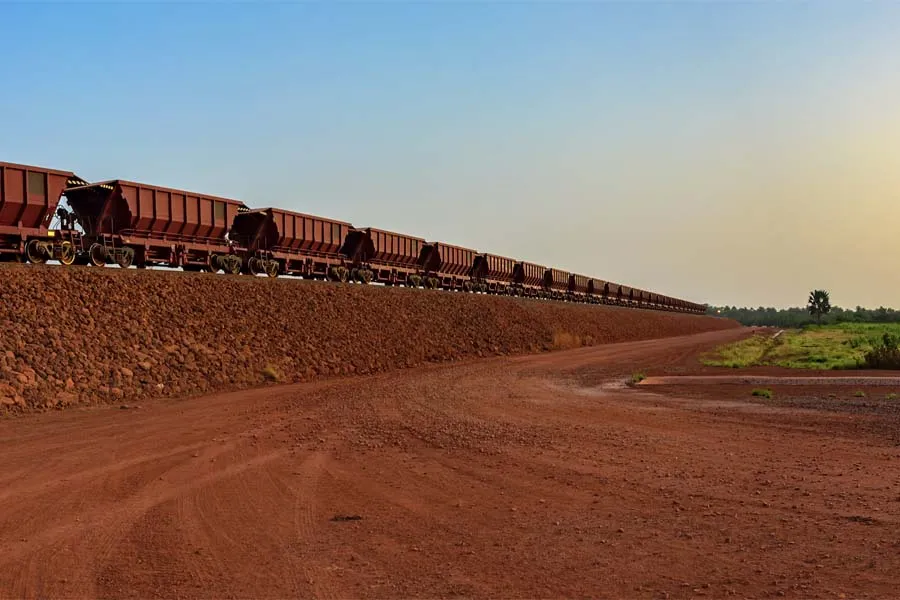
Guinea’s bauxite boom has been supported by significant infrastructure development. New railway lines, ports, and processing plants are being built to streamline exports and encourage local value addition. The Dapilon-Santou railway, completed in 2021 by the SMB-Winning consortium, stands as one of the largest private infrastructure projects in West Africa, connecting inland mines to coastal ports.
However, the government’s long-term strategy goes beyond extraction. The National Mining Policy seeks to transform Guinea from an exporter of raw materials into a producer of refined alumina and, eventually, aluminum. Several refinery projects are under consideration, with Chinese and Emirati investors exploring joint ventures to build processing facilities on Guinean soil.
Economic and Environmental Balancing Act
The bauxite sector accounts for over 20% of Guinea’s GDP and more than 90% of its export earnings, making it the backbone of the national economy. Yet, the industry faces challenges. Communities in mining regions often express concerns over land degradation, dust emissions, and limited local benefits. The government and operators are now under growing pressure to adopt sustainable mining practices, improve community engagement, and ensure that revenues contribute effectively to national development.
The Road Ahead
With the upcoming Simandou iron ore megaproject expected to complement the mining sector, Guinea’s economic landscape is poised for transformation. But sustaining this growth will depend on sound governance, local value creation, and environmental stewardship.
As the world accelerates toward a low-carbon future, aluminum—made from Guinea’s bauxite—will remain in high demand for electric vehicles, renewable energy systems, and sustainable construction. For Guinea, this offers a unique opportunity: to leverage its mineral wealth not only for profit but for long-term, inclusive development.